

Employee Assistance Programs in India (EAPs) have emerged as crucial tools for organizations to support their employees’ well-being. A study by ASSOCHAM (2022) revealed that nearly 42.5% of Indian corporate employees suffer from stress-related issues. Burnout, anxiety, depression, sleep disorders and fear of losing someone are on the rise due to long work hours, poor work-life balance, and job insecurity, especially post-pandemic. Read our blog on: Effective ways to deal with Burnout and Workload
Organizations are now realizing the urgency to prioritize employee well-being and turning towards the support of Employee Assistance Programs in India. However, the effectiveness of EAPs largely depends on the organization’s role in implementing and promoting these programs. In the previous blog we dived deep into the strategic role of HR behind a successful EAP program. To read more about this check out our blog: The Strategic Role of HR in Employee Assistance Programs.
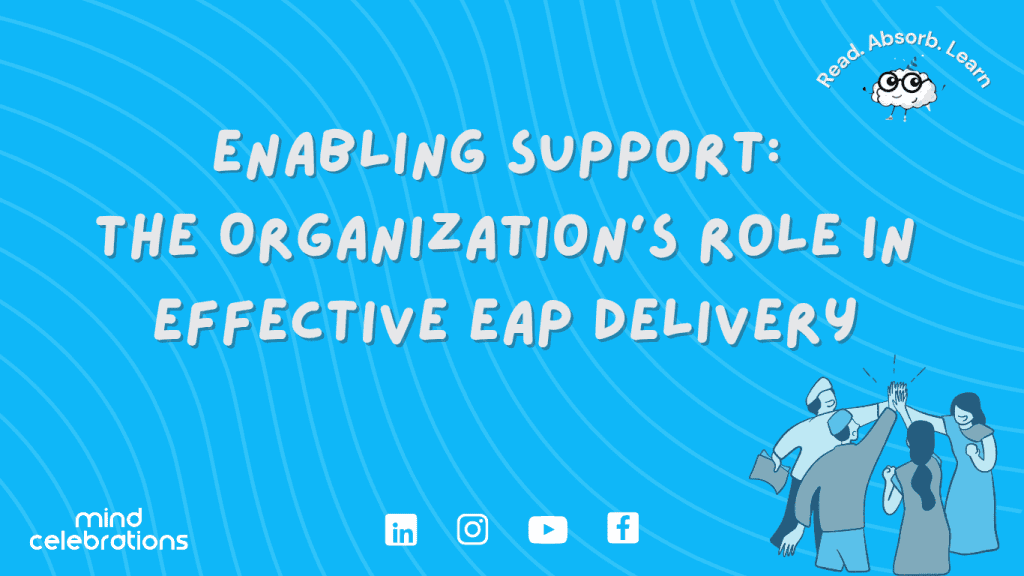
In today’s blog, let’s explore the multifaceted role organizations play in the Employee Assistance Program in India.
Employee Assistance Program
1. Creating a Supportive Organizational Culture
Organizational culture significantly impacts EAP effectiveness; it can help build the team’s belongingness, foster productivity at work and increase cohesiveness amongst the team. Despite increasing awareness, mental health stigma remains high in India. Many employees avoid seeking help for fear of being judged or penalized. A study found that a strong psychosocial safety climate (PSC) can enhance the impact of EAPs on reducing employee psychological distress. PSC refers to employees’ perceptions of managerial policies, practices, and procedures that protect their psychological health and safety.
It is when employees feel safe to speak up, take interpersonal risks, and be themselves without fear of punishment, ridicule, or negative consequences. It can simply be open communication, respectful behaviour towards teammates, encouragement in participation, etc. It’s a foundational element of a healthy organizational culture and is crucial for innovation, inclusion, performance, and well-being. When organizations prioritize psychological safety at the workplace through policies and procedures EAPs can have a more significant positive effect on employees’ mental well-being.
2. Securing Leadership Support
Leadership buy-in is critical for EAP services success; it can help build trust amongst organizations about the services. Research indicates that when leaders actively promote EAPs, employees are more likely to use the services. For instance, a medium-sized technology company that faced high turnover due to employee burnout implemented an EAP program with leadership support. This led to a 30% reduction in turnover over a year and increased employee engagement scores. Leaders can also model healthy behaviors and share personal stories to destigmatize mental health discussions, fostering a culture of openness and support.
3. Promoting Awareness and Accessibility
Many employees are unaware of EAP services or how to access them. Organizations need to communicate EAP services and its benefits clearly and frequently. A study showed that organizations with effective EAP promotion strategies have higher utilization rates. For example, a healthcare provider launched a robust EAP service with strong promotional efforts, resulting in a 40% increase in mental health service utilization among employees and a significant decrease in stress-related absenteeism. EAPs, especially when confidential and employer-sponsored, offer a stigma-free gateway to professional support. Indian companies are now recognizing that mental wellness is a business imperative, not just an HR initiative.
4. Integrating with Other Programs
EAP services should be integrated with existing employee benefit programs to create a cohesive support network. Effective integration ensures EAP services complement rather than duplicate other resources leading to improved employee well-being and productivity.
5. Overcoming Challenges
Organizations face challenges such as budget constraints and employee stigma. A study revealed that budget limitations are a significant barrier to EAP services implementation. Additionally, the stigma surrounding mental health can deter employees from using EAP services. It is the organization’s role to make employees understand and aware about the importance of mental well-being at the workplace and its benefits to increase productivity. Organizations can address these challenges by investing in EAP services as a long-term investment in workforce well-being and by normalizing mental health conversations.
6. Measuring Effectiveness
Regular evaluation of EAP services is essential to ensure they meet employees’ needs. Metrics like employee engagement, retention rates, and reductions in absenteeism can indicate EAP success. For example, organizations track usage rates and gather employee feedback to refine their EAP offerings. Financial outcomes, such as healthcare cost reductions and increased productivity, also reflect EAP value.
7. Tailoring Services to Diverse Needs
EAPs should be designed to address the diverse needs of employees. Millennials and Gen Z now make up a significant part of India’s workforce. They value psychological safety at the workplace and emotional support. Expect inclusive policies and mental health benefits. Are more likely to use digital platforms for therapy and coaching. Organizations can conduct surveys to understand employees’ specific requirements and tailor EAP services accordingly. A study highlighted that EAPs offering a range of services, such as mental health counseling and financial advice, are more effective in improving employee well-being.
Organizations play a pivotal role in the success of the Employee Assistance Program in India by fostering a supportive culture, securing leadership support, promoting awareness, integrating with other programs, addressing challenges, measuring effectiveness, and tailoring services. By prioritizing EAPs as a strategic investment in employee well-being, organizations can enhance productivity, reduce turnover, and create a more inclusive and supportive work environment. As the workplace evolves, the proactive role of organizations in EAPs becomes increasingly vital in promoting mental health rights and overall employee wellness.
FAQs
What is an organization’s role in EAP programs?
1. Creating a Supportive Organizational Culture
2. Securing Leadership Support
3. Promoting Awareness and Accessibility
4. Integrating with Other Programs
5. Overcoming Challenges
6. Measuring Effectiveness
7. Tailoring Services to Diverse Needs
What are Mental stress statistics in India?
A study by ASSOCHAM (2022) revealed that nearly 42.5% of Indian corporate employees suffer from stress-related issues. Burnout, anxiety, depression, sleep disorders and fear of losing someone are on the rise due to long work hours, poor work-life balance, and job insecurity, especially post-pandemic.
What is the importance of psychological safety at the workplace?
A study found that a strong psychosocial safety climate (PSC) can enhance the impact of EAPs on reducing employee psychological distress. PSC refers to employees’ perceptions of managerial policies, practices, and procedures that protect their psychological health and safety